Nubra Valley
- Home
- Nubra Valley
About Nubra Valley
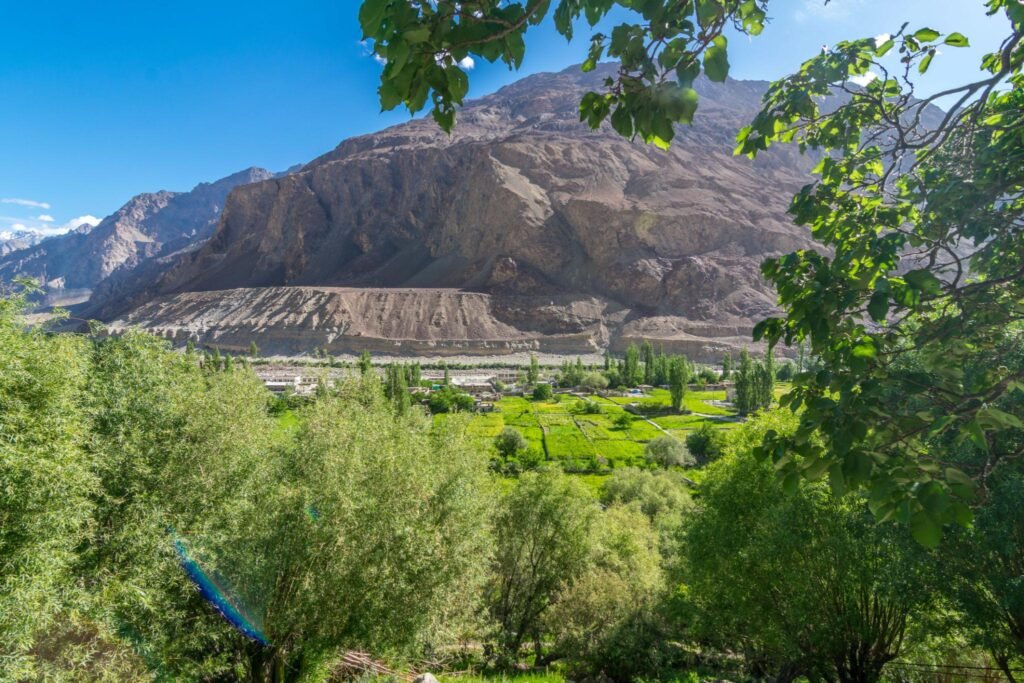
Nubra Valley is one of the most beautiful and unique destinations in Ladakh, located around 150 km from Leh. Known as the “High Altitude Cold Desert of India,” Nubra Valley is famous for its sand dunes, monasteries, rivers, and scenic mountain landscapes.
The valley lies at an average altitude of 10,000 feet (3,048 meters) above sea level and is formed by the meeting of two important rivers — the Shyok River and the Nubra River (also called Siachen River). These rivers originate near the Siachen Glacier and flow through the valley, creating fertile villages in the middle of an otherwise dry desert region.
Nubra Valley also separates two major mountain ranges:
- Ladakh Range
- Karakoram Range
Because of this geographical location, the valley offers a rare combination of desert, riverbeds, green villages, and snow-covered peaks — all in one place.
Why Nubra Valley is Famous?
Nubra Valley is among the top tourist attractions in Ladakh because of its diverse natural beauty and cultural significance.
Some key reasons why travelers visit Nubra Valley include:
- White sand dunes at Hunder
- Double-humped Bactrian camels
- Ancient Buddhist monasteries
- Scenic villages like Turtuk and Sumur
- Hot water springs at Panamik
- Views of Karakoram mountains
Historically, Nubra Valley was also an important stop on the ancient Silk Route that connected India with Central Asia. Traders used this route to transport goods like silk, spices, wool, and precious stones.
Even today, traces of that trade culture can be seen in the valley’s people, lifestyle, and the famous Bactrian camels.
Top Highlights of Nubra Valley
Here are the major highlights travelers experience in Nubra Valley:
Camel safari in Hunder Sand Dunes
Visit to Diskit Monastery
View of Maitreya Buddha Statue
Exploration of Turtuk Village
Trek to Yarab Tso Lake
Bath in Panamik Hot Springs
Camping under starry skies
Photography of desert landscapes
Each location offers a different travel experience — cultural, spiritual, or adventure-based.
Places to Visit in Nubra Valley
Here are the major highlights travelers experience in Nubra Valley:
1. Diskit Monastery
Diskit Monastery is the oldest and largest monastery in Nubra Valley, built in the 14th century. It is located on a hilltop overlooking Diskit town and the surrounding valley.
The monastery is famous for its giant 32-meter-tall statue of Maitreya Buddha, which faces west and symbolizes peace and protection for the region.
Inside the monastery, visitors can see:
- Ancient murals
- Buddhist scriptures
- Prayer halls
- Fresco paintings
- Guardian deity idols
The panoramic view from the monastery offers one of the best photography spots in Nubra Valley.
2. Hunder Sand Dunes
Hunder is famous for its white sand dunes located in the cold desert region of Nubra Valley.
What makes Hunder unique is the presence of double-humped Bactrian camels, which are rare and found only in this part of India.
Visitors can enjoy:
- Camel safari rides
- Quad biking
- ATV rides
- Desert camping
- Sunset photography
The contrast of sand dunes with snow mountains makes Hunder one of the most iconic landscapes in Ladakh.
3. Turtuk Village
Turtuk is one of the northernmost villages of India, located near the Indo-Pakistan border. It was opened for tourism only in recent years and is known for its unique Balti culture.
Unlike other Ladakhi villages, Turtuk offers:
- Apricot orchards
- Stone houses
- Wooden bridges
- Balti cuisine
- Cultural homestays
The village provides insight into the lifestyle of people living in border regions and is often called the “last village of India” on this route.
4. Yarab Tso Lake
Yarab Tso Lake is a hidden high-altitude lake located near Sumur village. It requires a short hike to reach the lake, which adds to its exclusivity.
The lake is considered sacred by locals, and visitors are expected to maintain silence and respect the surroundings.
Its crystal-clear water reflects the surrounding mountains, making it a peaceful and photogenic destination.
5. Panamik Village & Hot Springs
Panamik is famous for its natural hot water springs rich in sulphur content. These springs are believed to have healing and medicinal properties.
Located close to the Siachen Glacier route, Panamik is one of the last accessible villages for civilians.
Travelers visit here to:
- Relax in hot springs
- Explore local villages
- Enjoy mountain views
Hidden Gems in Nubra Valley
Apart from the popular tourist spots, Nubra Valley has several lesser-explored destinations:
- Ensa Monastery — A quiet cliffside gompa
- Sumur Village — A green oasis in the desert
- Warshi Village — Last accessible civilian road
- Agham & Shyok routes — Scenic offbeat drives
These places are ideal for travelers seeking solitude and untouched landscapes.
Festivals and Cultural Life
Nubra Valley celebrates several Buddhist festivals that reflect its deep spiritual heritage.
Dosmoche Festival
Held during winter, this festival includes masked dances and rituals performed by monks to ward off evil spirits.
Losar Festival
Celebrated as the Tibetan New Year, Losar includes prayers, traditional music, feasts, and cultural performances.
Other cultural events include:
- Archery competitions
- Camel races
- Folk dances
- Local fairs
These festivals offer visitors a chance to witness Ladakhi traditions closely.
Permits Required for Nubra Valley
Due to its proximity to international borders and sensitive military zones, permits are mandatory to enter Nubra Valley.
For Indian Nationals
Inner Line Permit (ILP) is required.
It can be obtained:
- Online via Ladakh administration website
- Offline from DM Office in Leh
For Foreign Nationals
Protected Area Permit (PAP) is required.
This must be arranged through a registered travel agent in Leh.
Permits are checked at multiple army checkpoints such as:
- South Pullu
- North Pullu
- Khalsar
- Travelers must carry multiple photocopies.
Things to Do in Nubra Valley
Nubra Valley offers a mix of adventure, cultural, and relaxation experiences.
Camel Safari at Hunder
Riding a double-humped Bactrian camel across the sand dunes is the most famous activity in Nubra Valley.
Camel safari usually lasts:
- 15–30 minutes
- Approx cost: ₹200–₹500 per person
Best time: Evening sunset.
Quad Biking & ATV Rides
Adventure lovers can enjoy quad biking on the sand dunes of Hunder.
It offers:
- High-speed dune rides
- Desert adventure experience
Camping in Nubra Valley
Camping is one of the best ways to experience Nubra’s night skies.
Visitors can stay in:
- Swiss tents
- Luxury camps
- Riverside campsites
Stargazing here is exceptional due to low light pollution.
Visit Monasteries
Monastery visits offer insight into Ladakhi Buddhist culture.
Popular monasteries:
- Diskit Monastery
- Samstanling Gompa
- Ensa Gompa
Accommodation Options in Nubra Valley
Nubra Valley offers a range of stays from budget guesthouses to luxury camps.
Popular Hotels
Some well-known hotels include:
- Hotel Sten-Del (Diskit)
- Hotel Grand Nubra
- Hotel Real Siachen
- Lchang Nang Retreat
- Hotel Yarab Tso
These hotels provide:
- Comfortable rooms
- Mountain views
- Multi-cuisine food
- Garden dining areas
Camps in Nubra Valley
Camping is very popular, especially in Hunder and Sumur.
Famous camps include:
- Nubra Ethnic Camp
- Mystique Meadows Camp
- Cold Desert Camp
- Royal Deluxe Camp
- Desert Himalaya Resort
Facilities offered:
- Attached washrooms
- Hot water
- Bonfire nights
- Cultural programs
- Organic meals
Homestay Experience
Travelers looking for cultural immersion can stay in Ladakhi homestays.
Benefits:
- Local food
- Cultural interaction
- Traditional lifestyle experience
Popular in villages like Turtuk and Sumur.
Travel Tips for Nubra Valley
- Carry enough cash.
- Obtain permits in advance.
- Acclimatize in Leh first.
- Carry warm clothes year-round.
- Keep medicines & oxygen cans.
- Fuel vehicles in Leh.
- Expect limited network.
- Respect local culture.
- Avoid littering.
- Start journeys early due to mountain roads.
Frequently Asked Questions
Yes, but only Diskit and Hunder can be covered. Overnight stay is recommended.
Yes, it is safe for tourists, but weather and altitude precautions are necessary.
Yes, ILP for Indians and PAP for foreigners.
Sand dunes, camels, monasteries, and Silk Route heritage.